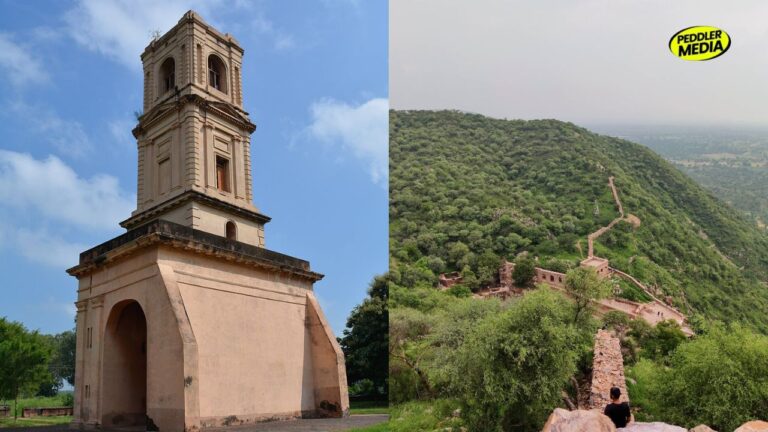
5 Places in Haryana That Even Haryanvis Don’t Know About
Have you ever thought Haryana is just highways, farms and sports? So did everyone else.
But there is a side of this state that nobody talks about. A ghost town sitting 21 km from Gurugram. A volcano that is 73 crore years old and still breathing underground. Rocks that make sounds when you touch them.
These are not stories from Rajasthan or Kerala. These Mysterious Places in Haryana — and most people have no idea they exist.
5 Most Mysterious Places in Haryana You Never Knew Existed
1. The Ghost Town of Farrukhnagar — Gurugram
Just 21 km from Gurugram’s glass towers is a town that time completely forgot.
Farrukhnagar was built in 1732 by Faujdar Khan, a governor under Mughal emperor Farrukhsiyar. It was once a booming salt trade hub — and then slowly became a ghost town in the early 20th century.
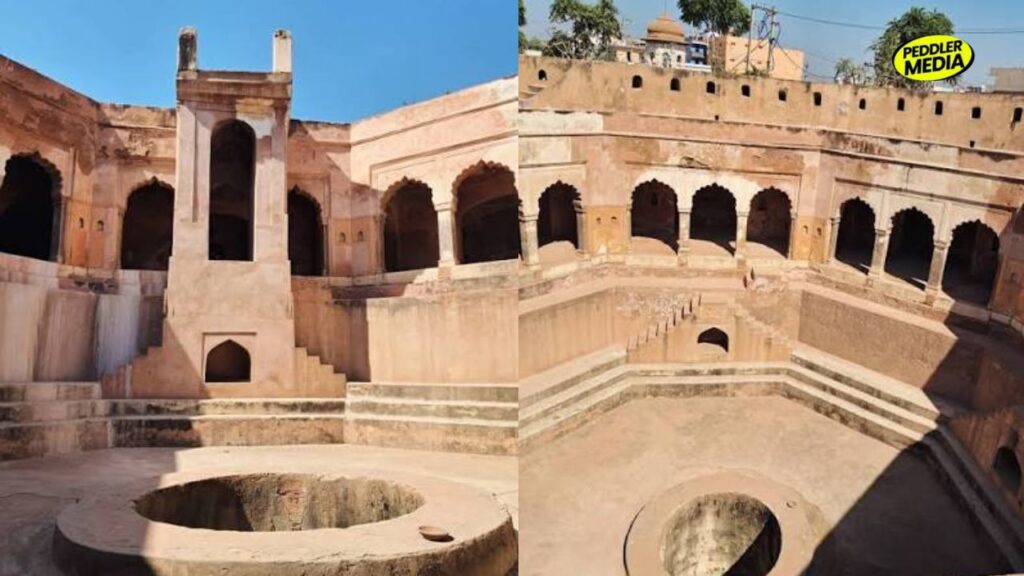
At the centre of this town sits a 3-storey octagonal stepwell called Baoli Ghaus Ali Shah. The central water tank goes 6.5 metres deep. The upper floors had private chambers built for rest and recreation.
There is also a tunnel that once connected the Sheesh Mahal to this baoli — so the queen could walk underground to bathe. That tunnel is sealed shut today. Locals don’t go near this place after dark.
Also Read:- Ghost in the Middle of the Village: The Slow Death of Haryana’s Chaupal Culture
2. Brahma Sarovar’s Hidden Depths — Kurukshetra
Everyone knows Brahma Sarovar as a holy place. But nobody talks about what lies beneath it.
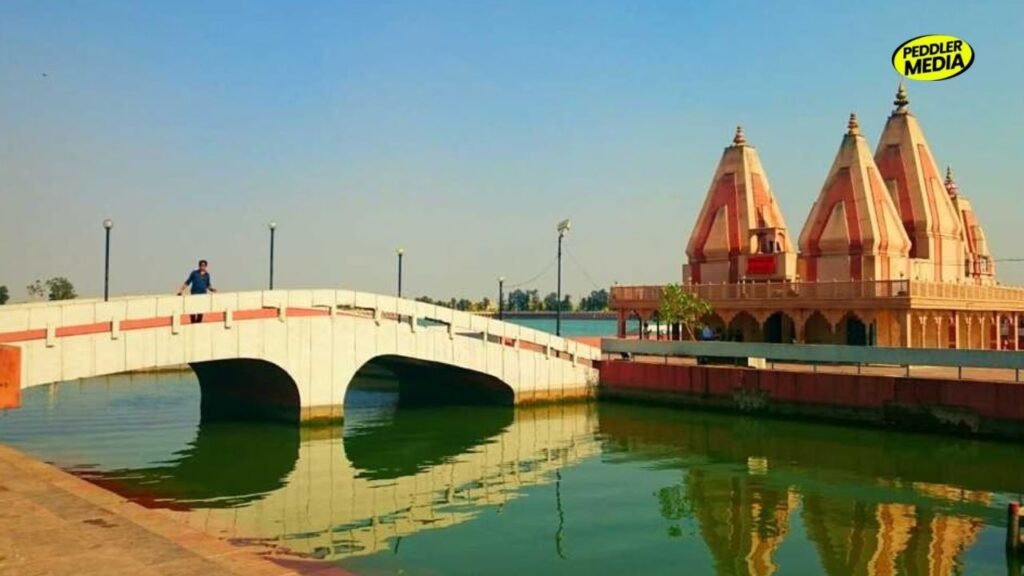
This sacred lake is 3600 feet long, 1500 feet wide and 45 feet deep. It has been mentioned in the 11th century memoirs of Al Beruni. According to Mahabharata, Duryodhan hid himself underwater in this very sarovar on the final day of the war.
Yudhishthir built a victory tower on the island in the middle of this lake after the war. Akbar’s courtier Abul Fazl once described this massive water body as a miniature sea during a solar eclipse.
Another sacred lake called Sannihit Sarovar is connected to Brahma Sarovar through underground channels. Engineers who have studied this ancient water system still cannot fully explain how it was designed thousands of years ago.
3. The Volcano That Never Died — Tosham Hill, Bhiwani
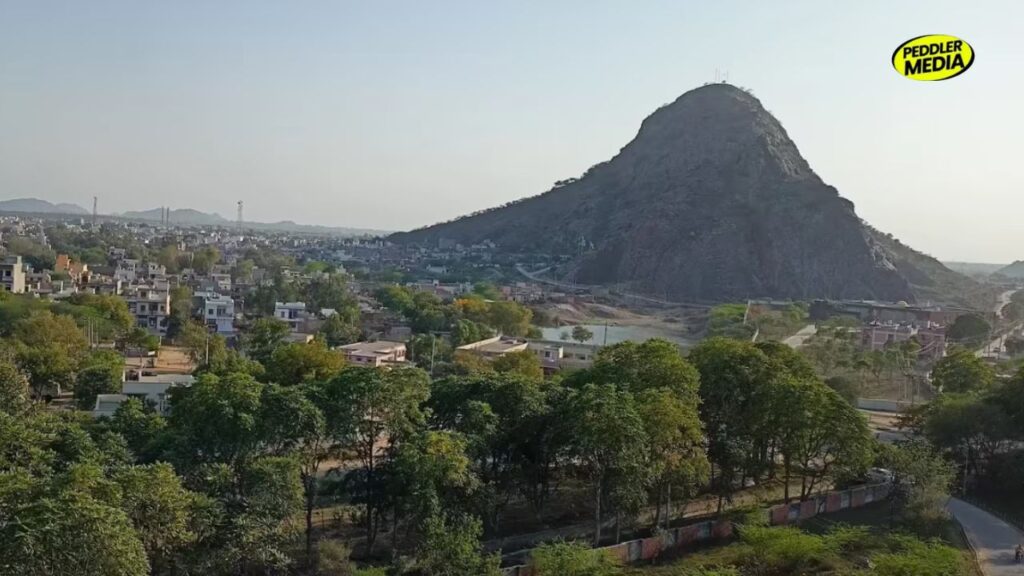
Most people think Tosham Hill is just another trekking spot in Bhiwani. It is not.
Tosham Hill is part of an extinct volcano that erupted 73 crore years ago. The entire area is the outer ring of a collapsed volcanic chamber that stretches 16 kilometres in diameter.
Inside the caves of this hill are sacred kunds — Pandu Tirath, Surya Kund, Kukkar Kund and Vyas Kund. The water in these kunds contains sulfur and is believed to heal skin diseases. The highest geothermal heat flow ever recorded in all of India comes from this exact area.
In 2018, a 1,000 year old 60 kg stone idol of Vishnu was found here. And in 2013, rock paintings from the 5th century were discovered — including a figure that looked exactly like a dinosaur.
Also Read:- Why The ‘Haryana Flat Plains’ Are The Ultimate Mind-F**k For Road Trippers
4. The Mughal Maze — Chhatta Rai Bal Mukund Das, Narnaul
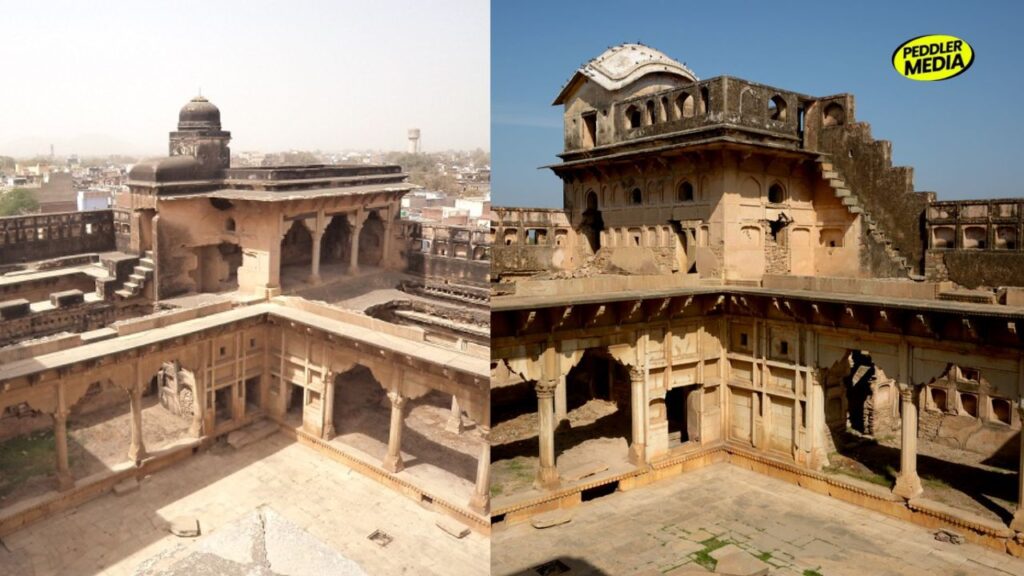
From the outside it looks like a crumbling old building. Step inside and it is something else entirely.
This five storey palace was built by Rai Bal Mukund Das, the prime minister of Shah Jahan. It has multiple halls, rooms and pavilions with marble floors and pillars in the inner royal chamber.
To keep the palace cool in summers, fountains were powered by a Persian wheel pulling water from a well. The underground chambers had three layers designed so that natural light streamed in throughout the day.
And the wildest part — tunnels from this palace are believed to have led directly to Delhi, Jaipur and Mahendragarh. Nobody knows how far those tunnels actually go.
5. The Rocks That Sing — Kalyana, Charkhi Dadri
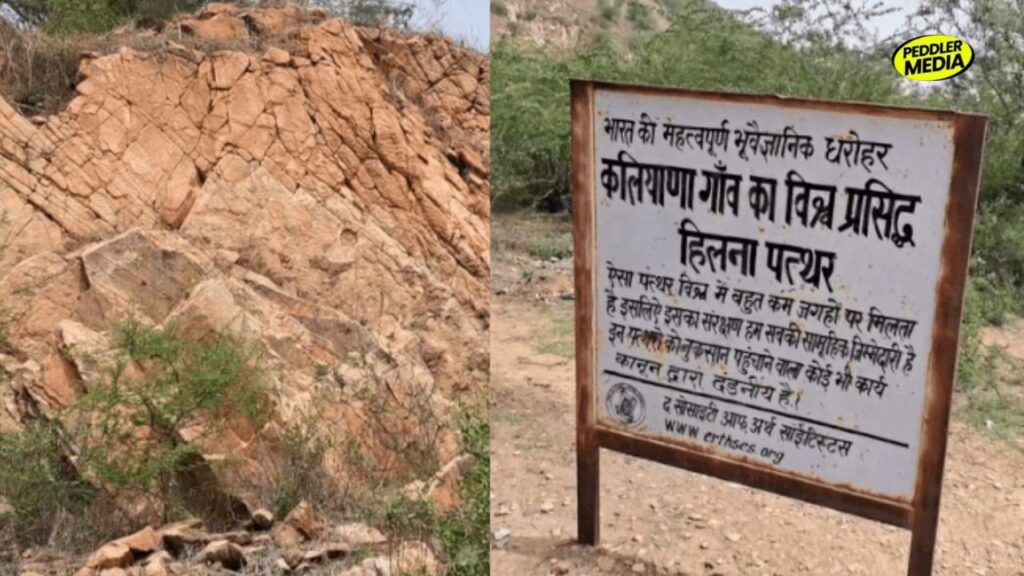
This one does not even look like a tourist spot. It is just a village near Charkhi Dadri with a hill. But the rocks on that hill do something that science has not fully explained yet.
The rocks in this area belong to the Precambrian Malani igneous suite — the same volcanic rock system as Tosham Hill, dated at 73 crore years old. The area sits on the outer ring of an ancient collapsed volcanic caldera.
When you tap or touch the rocks on this hill, they produce a sharp metallic ringing sound — almost like striking a metal plate. It is not an echo. It is the rock itself vibrating. Geologists believe the dense meta-volcanic composition of these ancient rocks causes them to resonate differently from ordinary stone. There are very few places in the world where this phenomenon is found naturally.
A signboard from the Earth Scientists organisation stands at this site declaring it a geological heritage of India — warning that damaging these rocks is a punishable offence. Most Haryanvis have never heard of it. Most Indians have never heard of it.
- Before Masoom Sharma And Aman Jaji, These Haryanvi Films Reached Theatres

- Everything You Need To Know About Diljit’s Aura India Tour 2026
- This Panchkula vendor is selling India’s most unique pineapple burger since 2015



Haryana is not just highways and farms. It is ghost towns, buried volcanoes, cursed tunnels and rocks that sing. This is the Haryana that nobody covers.
Peddler Media covers the culture, the music, the history and the stories of Haryana that everyone else misses.
Follow Peddler Media For More Updates | Instagram | Facebook | Youtube | Pinterest