From Messi Campaigns to a Singapore Jail: The Real Story of How Byju’s Crashed

Byju Raveendran built a $22 billion empire from a Kerala classroom. Today, he’s facing six months in jail — and his whereabouts are unknown.
It was 2022. Lionel Messi was holding a football in a purple jersey. The word on his chest: BYJU’S. That same year, Shah Rukh Khan’s face was everywhere — on television, on billboards, in your head whether you liked it or not.
That same year, Byju’s hit a valuation of $22 billion. And today, in 2026, the man who built all of it — Byju Raveendran — has been sentenced to six months in jail by a Singapore court.
This isn’t just the story of a company collapsing. It’s the story of a dream that flew too fast, climbed too high, and fell too hard.
Byju Raveendran Jail Case: What Actually Happened in Singapore
The case that sent Raveendran to jail was brought by Qatar Holdings, a subsidiary of the Qatar Investment Authority (QIA) — a sovereign wealth fund that had invested in Byju’s during its peak years.
The dispute centred on a $235 million personal guarantee Raveendran had given. Qatar Holdings alleged he had not fully disclosed his personal assets as required under the terms of that guarantee. Singapore courts issued asset freeze orders as far back as April 2024, blocking him from moving certain assets while the case was active.
The court found that Raveendran had disobeyed multiple asset-related orders, repeatedly failing to submit required disclosures despite clear directions. Under Singapore law, that is contempt of court. The sentence: six months in jail.
Read More:- India’s New Cooling System? Jyotiraditya Scindia’s Onion Goes Viral
Before the Billions, There Was Just a Blackboard
Byju Raveendran didn’t come from money or connections. He grew up in Kerala, studied engineering at a government college, and took a job at a shipping company after graduating. But teaching was always the pull.
He started tutoring students preparing for the CAT entrance exam. No investors. No office. Just a room full of students and a teaching style that actually worked — breaking down intimidating topics into language anyone could follow. Word spread. Classes filled up. By 2007, he had turned those sessions into a proper coaching business.
At that point, “unicorn” wasn’t a word people used in Indian business circles. It was just a man who was good at explaining things.
2015: The App That Made Everything Explode
The real inflection point came in 2015 with the launch of the Byju’s Learning App. The timing was almost unfairly perfect. Smartphones were landing in the hands of millions of Indian families. Parents were actively looking for tools to help their kids learn better, and the app gave students the ability to study from home, revisit lessons, and move at their own pace.
Investors arrived quickly. Sequoia Capital. BlackRock. Major global firms bet on Byju’s early. By 2017, the brand had gone mainstream — Shah Rukh Khan signed on as ambassador, and Byju’s ads followed you everywhere from primetime TV to cricket stadiums. Then the pandemic happened.
COVID Was the Rocket Fuel — and the Beginning of the End
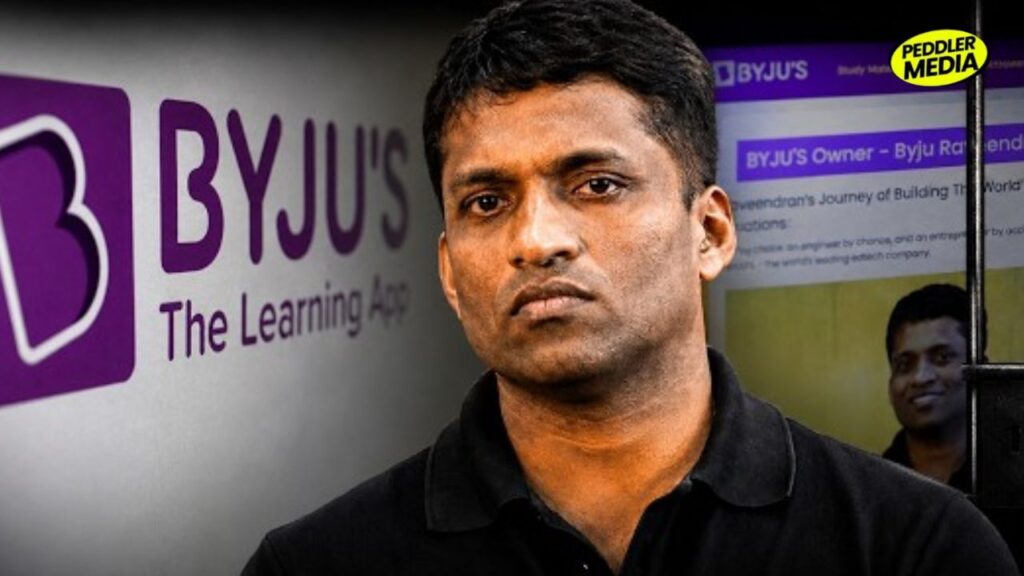
When schools shut down in 2020, online education didn’t just grow. It exploded. Byju’s was positioned perfectly, and the platform became one of the most-used edtech tools in the world. By 2022, the company claimed over 150 million learners globally.
The spending matched the ambition. Byju’s acquired Aakash Educational Services, Epic, and Osmo, opened physical learning centres across India, sponsored the Indian cricket team, and put Lionel Messi in a FIFA World Cup campaign that ran across the globe. Valuation: $22 billion. From the outside, it looked like nothing could stop this.
What Was Happening Behind the Numbers
The pandemic ended. Kids went back to school. Demand for online learning cooled — but Byju’s spending did not. Marketing budgets, acquisition costs, international expansion — the cash kept flowing out. Reports put annual losses at roughly ₹4,500 crore, while revenue growth had slowed significantly.
Parents started filing complaints about high-pressure sales tactics — families being pushed to buy expensive course packages, in some cases steered toward loans to pay for them. In late 2022, the company laid off nearly 2,500 employees, about 5% of its workforce.
Read More:- BBC Highlights Peddler Media Insights on Haryanvi Music
2023 brought more trouble. Auditors resigned, reportedly flagging delays in financial disclosures. India’s Enforcement Directorate conducted searches at offices linked to Raveendran in Bengaluru, examining overseas fund transfers running into thousands of crores. The empire was cracking from every direction.
Two Courtrooms, Two Countries — and One Man in the Middle
By 2023, Byju’s was fighting legal battles on multiple fronts. It’s important to understand these as two separate disputes — because they’re often confused.
The Singapore case — Qatar Holdings vs. Raveendran
This is the case that led to the jail sentence. Qatar Holdings, a subsidiary of the Qatar Investment Authority (QIA), took Raveendran to a Singapore court over a $235 million personal guarantee he had given. The dispute centred on asset disclosures — whether Raveendran had fully disclosed his personal assets as required under the guarantee’s terms.
Singapore courts issued asset freeze orders, blocking him from moving certain assets while the case was active. The court found that required disclosures were repeatedly not submitted despite clear directions. Under Singapore law, that constitutes contempt of court. In May 2026, Raveendran was sentenced to six months in prison and ordered to pay approximately 90,000 Singapore dollars — roughly ₹67 lakh — in legal costs.
The US case — a separate battle in Delaware
Running parallel is a different dispute involving a $1.2 billion loan from US-based lenders, being heard in a Delaware court. It involves separate allegations around fund movements and financial transparency. Two cases. Two jurisdictions. One man answering for all of it at once.
What Raveendran Says
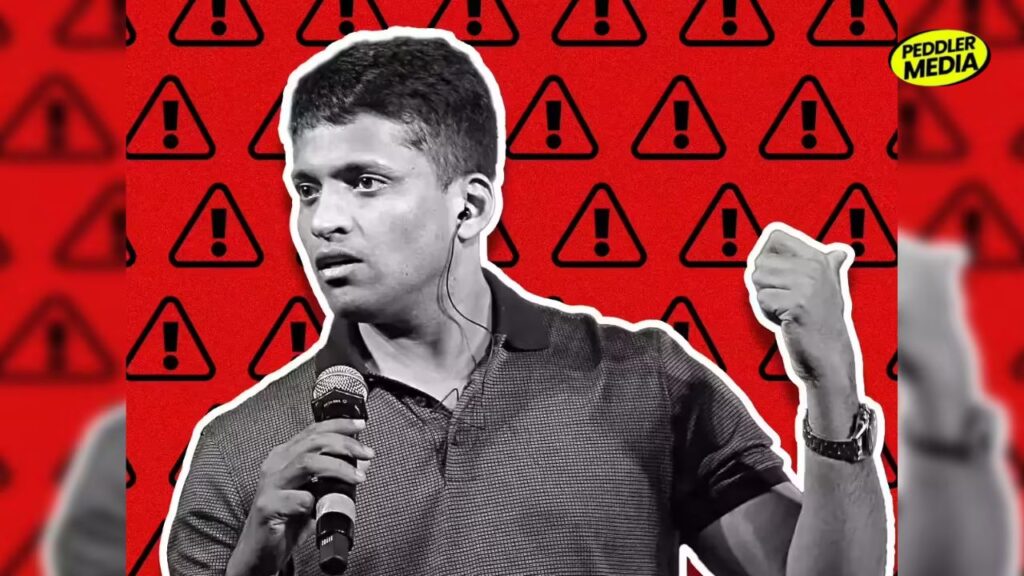
He has denied wrongdoing throughout. Raveendran described the Singapore matter as a “procedural contempt” issue — a dispute over document submissions, not fraud or criminal dishonesty. “There has been no wrongdoing on my part or on the part of the other founders,” he said. He also indicated that settlement talks with lenders and investors were nearing completion, and that he intends to appeal.
So What Actually Went Wrong?
The Byju’s collapse wasn’t one single failure. It was several compounding ones.
Spending like the pandemic would never end. When online learning demand normalised, Byju’s was still operating on pandemic-era budgets. That gap became unsustainable fast.
Aggressive sales over genuine value. The complaints weren’t just PR damage — they pointed to a business model under stress, chasing revenue through methods that eroded trust.
Transparency failures at the worst possible time. When auditors leave and courts find documents missing, it doesn’t matter how strong your brand once was. Credibility evaporates fast.
Overexpansion without the foundation. From Messi to Aakash to international centres, Byju’s was building in every direction simultaneously. When the base started shaking, everything built on top shook with it.
Read More:- Trolled Last Year, Topped Again — Prachi Nigam Scores 91.2%
- ‘Mahakavya Shri Ramayan Katha’ Trailer Gets Trolled, Fans Question VFX & Performances

- This Indian Fashion Designer Dressed SZA And Katseye — His Small Town Success Story Will Shock You
- Delhi Just Got a New Beauty Playground — Nykaa’s Biggest Store Is Here



Where Does This Leave Byju’s?
The company’s story isn’t technically over. But the platform that once lived on the phones of millions of Indian students is now fighting for survival in courtrooms and boardrooms across three continents.
What began in 2007 with a teacher, a whiteboard, and a room full of CAT aspirants has, in 2026, arrived at a Singapore sentencing hearing. India has produced many startup success stories. Byju’s is now its most expensive cautionary tale.
The lessons aren’t just for founders — they’re for investors who poured in money without asking harder questions, for regulators who struggled to keep pace, and for consumers who deserve better from companies that promise to educate their children. Some classrooms teach you how to build things. This one taught you how quickly they can fall.
📌 Reported and written for Peddler Media. All figures based on publicly available financial reports, court records, and verified news sources.
Follow Peddler Media For More Updates | Instagram | Facebook | Youtube | Pinterest